


Federal Legislative

Home » Federal Legislative

Please check back to view our 2012 Federal Legislative issues.

2011 Priority Federal Issues

Inland Action, along with its business partners, believes that transportation drives jobs and jobs drive the economy.  The lack of a federal transportation funding plan is costing jobs and lives and hinders our ability to compete globally.  A transportation act is needed now! 

Inland Action fully supports the reauthorization of the Workforce Investment Act.  We thank you for the $6.5 million in stimulus money that funded workforce training programs at San Bernardino Community College and Mount San Antonio Community College during 2010.  The Inland Empire’s unemployment rate is close to 15%, and a large percentage of the recipients who will be trained are dislocated workers.

Support:   We are asking for support of the local system and private sector boards.  We feel the private sector boards are extremely effective working with local educational institutions and businesses.

Other Issues

Economic Development Issues 

Education Issues

Reject any efforts to cut funding that Medicare provides for Graduate Medical Education and reorient federally support residency training toward areas of national need, including primary care and general surgery. The demand for physicians will continue to rise – with or without health care reform – due to a growing population, aging baby boomers and a wave of soon-to-retire doctors. 

Environment Issues 

Inland Action supports the completion of the Santa Ana River Trail and Parkway. The project will link the upper and lower Santa Ana River watershed, the largest watershed in Southern California serving a population of 7 million residents, and close a gap in the construction of the 100 mile long Santa Ana River Trail and Parkway. The completion of a regional trail will enhance the value of housing, attract businesses and employees to the area; provide alternative commuting options to a region with some of the worst traffic in the nation; and provide access to outdoor recreational amenities, which will contribute to a healthier lifestyle and result in improved quality of life for the local communities.

Support:  $200,000 in Energy and Water Development Fund directly to US Army Corps of Engineers budget to support Santa Ana River Mainstem Recreation Plan to develop a Recreation Plan that identifies federal partnership opportunities to implement a multi-purpose trail between Seven Oaks Dam and Prado Dam.  This project is of high priority to local sponsors and will build off existing plans and partnerships.  Products will include:  (1) Project Partnership Agreement (PPA) – negotiate and execute between the Corps of Engineers and County of Riverside, on behalf of the Santa Ana River Trail Partnership, for the purpose of planning and implementation of Santa Ana River Trail.  (2) Recreation Plan – to identify opportunities for the Corps to participate in the design and implementation of the trail, contributing to the completion of the 100 mile trail, through a stakeholder-based master planning process.  Non-federal partners will cost share this project.

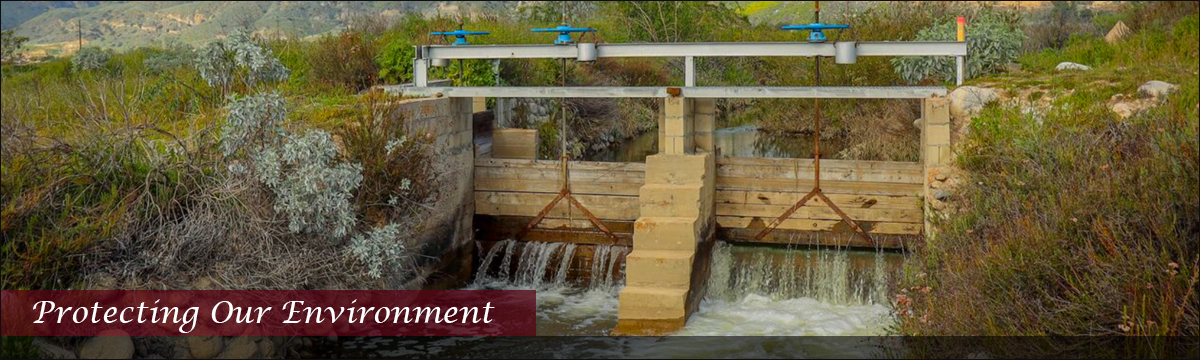
The Santa Ana Main Stem project is an ongoing flood control project along a 75 mile reach of the Santa Ana River, through three counties.  It is vital that work continue to the project completion, to protect the communities along the river from flooding.  The estimated project cost is $70.6M.

Support: $70.6 of Corps of Engineers requested funding for FY12 for this project, which is vital to the entire reach of the Santa Ana River, from San Bernardino to Newport Beach including funds to support recreation planning and implementation

Regional Water Issues

Inland Empire Perchlorate Groundwater Plume Assessment Act of 2011

Sponsor:  Rep Joe Baca (CA-4) (introduced 1/6/2011) Cosponsors (1)

Latest Major Action:  1/6/2011 Referred to House committee.  Status:  Referred to the House Committee on Natural Resources.

Support:  Inland Action supports the passage of H.R. 200 and any efforts to expand this Act to the Bunker Hill and San Bernardino Basins as well.

REQUESTED AMOUNT:  $1,000,000 for FY 2012 to continue with the planning and preparation phases of the project. 

The project received $500,000 in 2008/2009 and $1,000,000 in 2009/2010

Local Support comes from the City of San Bernardino Municipal Water Department (SBMWD), in partnership with East Valley Water District and other public water agencies in the region.

Enhanced Storm Water Capture Along the Santa Ana River

feet.  Even a fraction of that amount will be tremendous help to local water agencies who struggle to meet demand.  The IRWMP was adopted by the following cities and agencies:

Loma Linda, Redlands, San Bernardino, Big Bear Lake DWP, East Valley Water District, West Valley Water District, San Gorgonio Pass Water Agency, San Bernardino County Flood Control District, San Bernardino Valley Water Conservation District, Meeks & Daley Water Company, San Bernardino Valley Municipal Water District, Beaumont Basin Watermaster, City of Riverside, Yucaipa Valley Water District, City of Yucaipa and San Timoteo Watershed Management Authority.

Support:  Inland Action supports the WRDA request for authorization of this project.

The WCIP includes the continuing development and implementation of a unified regional incentive program to maximize water conservation and to motivate consumers to replace their high-water using devices and practices with more water efficient products and habits.  The ultimate goal of the WCIP is to attain a 20% reduction in per capita water consumption by the year 2020, as identified in the 2005 MWA Integrated Regional Water Management Plan.

Support:  Inland Action support for any federal funding available during FY 2012.

Critical Habitat for the Santa Ana Sucker

The US Fish and Wildlife Service’s announcement in December of 2009 that it would revisit the Critical Habitat for the Santa Ana Sucker, a fish that is listed as a threatened species under the Endangered Species Act, and is indicating it intends to expand the designated area far beyond the original designated habitat.  Many critical projects for local water supplies, flood control and transportation are jeopardized by the designation, and the quality of life in the region will suffer.

Inland Action opposes this arbitrary action that fails to consider the scientific and economic realities which should have been central to the agency’s decision.

Healthcare Issues

The Affordable Care Act (ACA) promises dramatic changes in America’s health care system. It sets a course to provide access to health insurance for most Americans, improve health care financing and delivery systems, incent and reward quality care, decrease medical errors and increase accountability while achieving savings for individuals and the federal government.  This is a tall order and one that hospitals want to see succeed.

Hospitals favor ACA because of its expanded access to care and insurance for millions of Americans:

Coverage Expansions – ACA is expected to create health insurance for 32 million Americans, approximately 6 million of whom live in California.  Coverage of uninsured people is a fundamental cornerstone of health care reform.  California hospitals support expanding coverage and reducing the number of uninsured to the lowest possible level.  ExpandingMedicaid and empowering the state-based exchanges are both giant steps toward universal coverage.

Insurance Reforms – Guaranteed issue; extended coverage for dependents; strict medical loss ratios; removal of lifetime caps; pre-existing conditions limitations and rescissions; and uniform benefit packages are all vital components of keeping costs down and moving toward universal coverage.

At the same time, there are some aspects of the ACA that hospitals are concerned about. In particular, theMedicare andMedicaid Payment Reductions:

Medicare & Medicaid Payment Reductions – Over the next 10 years, California hospitals will face more than $17 billion in additional payment reductions in theMedicare program. This will worsen hospital losses and result in shifting more costs to employers and individuals through the private insurance market.

Payments to providers from both government and private payers must be fair and adequate. Payment adjustments for certain readmissions need refinement; payments for the vital roles hospitals play in teaching tomorrow’s physicians and providing the community safety net must be recognized. Expected coverage expansions are an important component of fair and adequate payments, and must be monitored carefully.

In order to make health care reform successful for hospitals and patients, it is important that as coverage expands, reimbursements to hospitals are sufficient to sustain the increased patient volume and keep hospitals open. The timing of the proposedMedicare andMedicaid payment reductions should be carefully considered.

In light of these challenges, it is imperative that health care reform not be thrown out, but be modified to make sense and yield the impacts necessary. For hospitals, that means changes to the requirements around readmissions and hospital acquired infections. For businesses, that means changes to the 1099 reporting requirement implemented with great caution in California. California’s hospitals are committed to creating an optimally healthy society. In this new and rapidly changing era of health reform, hospitals, physicians, health plans and policymakers must work together to pursue innovative and cost-effective solutions that align incentives, provide greater value to patients, and ensure that California’s community hospitals will be open and available to care for our state’s 38 million people. 

Transportation Issues

The lack of infrastructure funding is costing jobs and lives and hinders our ability to compete globally.  A six-year transportation act is needed now!

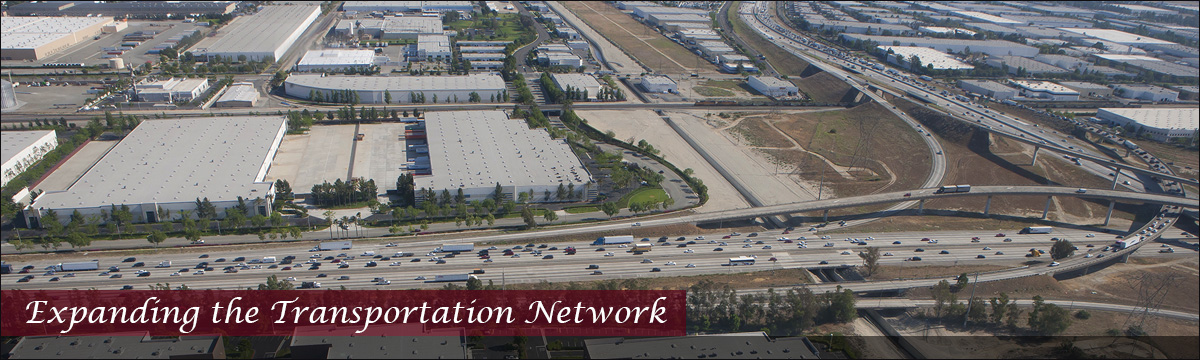
Goods going to market to/from the Ports of Los Angles and Long Beach to/from destinations outside of California are constrained because of interstate highway inefficiencies through the Cajon Pass.  The estimated cost for needed improvements is $368 million.  Local taxpayer funds of $100 million and state funds of an additional $100 million have been placed on this project, however, the state funds are in jeopardy without a federal partnership.  Inland Action supports SANBAG’s efforts in applying for any discretionary grants for the Devore Interchange, which has an immediate funding need of $37 million.

In an era of limited budgetary resources, federal policy tools that draw upon credit and tax incentives can play an important role with advancing major transportation investments.

Support an enhanced Transportation Infrastructure Finance and Innovation Act (TIFIA).  By investing $1 of federal money as a low interest loan against our infrastructure bonds, locally we put $30 to work.

Support expanding the availability of low-cost federal lending to job-creating infrastructure projects with sound financial backing by implementing programs like Build America Bonds, and qualified transportation improvement bonds.

The NEPA Pilot Program authorized by SAFETEA-LU is saving time and money and should be reauthorized.

Inland Action supports the first of several major urban transit projects with connections to other regional transit systems is close to starting construction.  Projects include the Downtown San Bernardino Passenger Rail project, the Redlands Passenger Rail project, and sbX.

San Bernardino International Airport

A non-profit, non-partisan corporation of public spirited leaders who have joined together
to be a catalyst for the economic well-being of the Inland Empire region of California.


Elected Officials

The following is a quick list of the elected officials related to the Inland Empire. Each link will take you to the respective website in a new tab.

U.S. Congress

California Senate

California Assembly

County Supervisors